
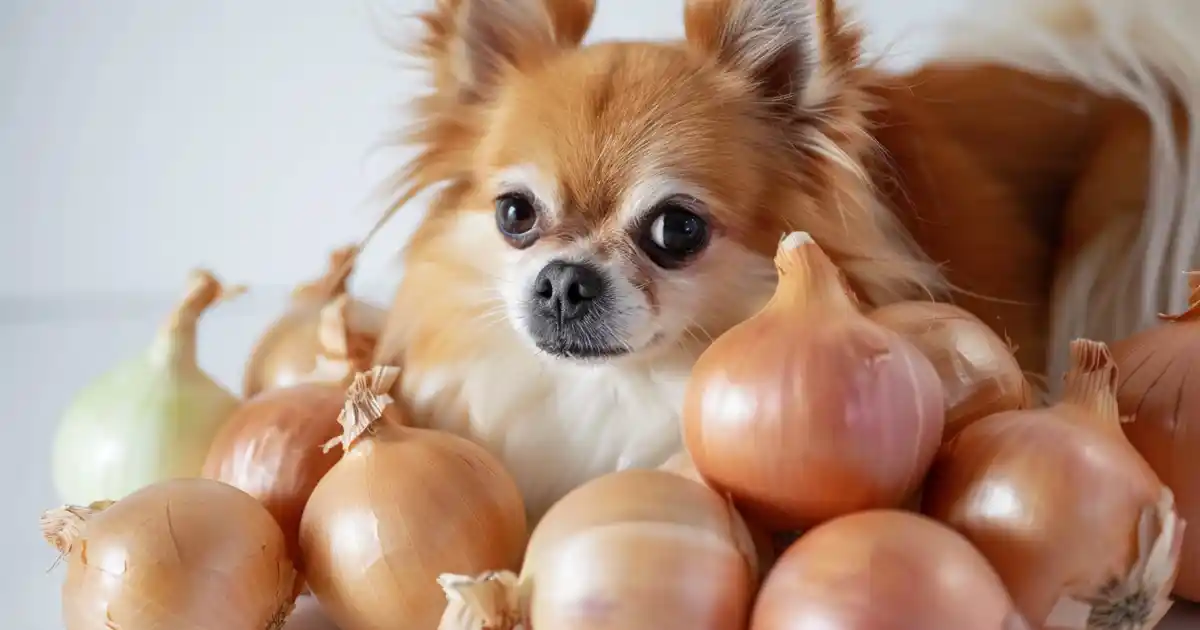
Have you ever dropped onion while cooking and watched your dog gobble it up before you could react?
Have you ever wondered why onions are considered dangerous for dogs when they seem so harmless to us? I used to think that a small amount of onion couldn’t possibly hurt my dog, until I discovered the serious science behind onion toxicity that completely changed my perspective. Now my fellow dog parents constantly ask how I keep my dogs safe from hidden onion ingredients, and my mother-in-law (who thought sharing her onion-loaded casserole was fine) keeps asking for my safe food list. Trust me, if you’re worried about accidentally poisoning your dog or confused about what foods are truly dangerous, this approach will show you it’s more straightforward than you ever expected.
Here’s the Thing About Onions and Dogs
Here’s the crucial truth: onions are genuinely toxic to dogs in ALL forms—raw, cooked, powdered, or dehydrated. I never knew onion toxicity was this serious until I learned that onions contain compounds called organosulfides (specifically n-propyl disulfide) that damage red blood cells in dogs, causing a potentially fatal condition called hemolytic anemia. The secret to keeping dogs safe is complete onion avoidance, not moderation. According to research on food toxicology, certain foods contain compounds that are harmless to humans but dangerous to other species due to differences in metabolism. This scientific reality creates a clear guideline: no amount of onion is safe for dogs, period. It’s honestly more black-and-white than I ever expected, and no complicated decision-making needed once you understand that onions are always off-limits.
What You Need to Know – Let’s Break It Down
Understanding the mechanism of onion toxicity is absolutely crucial to appreciating why this isn’t overprotective paranoia. Onions contain organosulfur compounds that, when ingested by dogs, oxidize hemoglobin inside red blood cells. This oxidation creates structures called Heinz bodies that damage cell membranes, causing red blood cells to rupture prematurely (took me forever to realize this happens at the cellular level before symptoms appear).
The destroyed red blood cells can no longer carry oxygen effectively, leading to anemia. In severe cases, the bone marrow can’t produce new red blood cells fast enough to compensate for the destruction, creating a life-threatening situation requiring blood transfusions. Here’s the scary part: toxicity is cumulative, meaning small amounts consumed repeatedly over days can be just as dangerous as one large dose.
Don’t skip understanding ALL forms of onion are toxic—I finally figured out this insight after assuming cooked onions were somehow safer. Raw onions, cooked onions, fried onions, onion powder, onion salt, dehydrated onions in seasoning mixes, and even the juice from onions all contain the toxic compounds. Cooking doesn’t neutralize the danger. If you’re learning about toxic foods for the first time, check out my complete guide to dangerous foods for dogs for foundational knowledge that could save your dog’s life.
The toxic dose varies but any amount is concerning. Studies suggest that as little as 5 grams of onion per kilogram of body weight can cause toxicity—that’s less than half an onion for a 20-pound dog. Smaller amounts consumed over several days can accumulate to toxic levels. I always recommend treating any onion ingestion seriously because individual sensitivity varies, and even small amounts can affect some dogs. Yes, the zero-tolerance approach really works and here’s why: you’re eliminating all risk rather than gambling with your dog’s health based on arbitrary “safe” amounts that don’t actually exist.
The Science and Psychology Behind Why This Works
Research from leading veterinary toxicologists demonstrates that complete onion avoidance works consistently because there is no safe threshold—any amount can potentially cause harm depending on the dog’s size, individual sensitivity, and cumulative exposure. The organosulfur compounds in onions are metabolized into oxidizing agents that specifically target red blood cells. Unlike some toxins that require large doses to cause problems, onion toxicity occurs at relatively low levels and accumulates over time.
The psychological aspect matters too—dog owners often fail because they underestimate hidden onion sources or assume “just a bite” won’t hurt. Studies confirm that vigilance about ingredients, especially in prepared foods and table scraps, prevents accidental poisoning. Experts agree that education combined with strict household rules about never feeding onions creates optimal safety. Here’s what makes this different from a scientific perspective: you’re not managing a toxin dose to stay below a danger threshold, you’re completely eliminating exposure because no safe threshold exists. I’ve learned that understanding this science helps maintain appropriate caution without feeling like you’re being unnecessarily restrictive.
Here’s How to Actually Make This Happen
Start by establishing a firm household rule: absolutely no onions for dogs, ever—here’s where I used to mess up by thinking “just a tiny taste” was harmless. Educate every family member, especially children and visitors who might not understand the danger. This step takes five minutes but creates lasting change by eliminating the most common source of accidental exposure: well-meaning people sharing inappropriate foods.
Now for the important part: learn to identify hidden onion sources in everyday foods. Don’t be me—I used to only watch for obvious onions while missing onion powder in broths, seasonings, and processed foods. Baby food often contains onion powder. Canned soups, gravies, and sauces typically include onions. Many frozen dinners, pizza, deli meats, and prepared foods contain onion in various forms. Here’s my secret: I became an obsessive label reader, checking ingredients on everything before my dogs get anywhere near it. If I can’t verify ingredients, my dogs don’t get it.
Store onions securely out of reach (when it clicks, you’ll know why this matters) because dogs can be surprisingly resourceful. My mentor taught me this trick: I keep onions in high cabinets or closed containers rather than in accessible bowls on counters where curious dogs might investigate. Results can vary, but secure storage prevents the majority of accidental ingestions.
Practice vigilant floor monitoring during food preparation. Every situation has its own challenges—maybe you have multiple family members cooking, young children who drop food, or a particularly food-motivated dog who hoovers up anything that hits the ground. Don’t worry if you’re just starting out with kitchen awareness; even improving cleanup speed after dropping ingredients helps reduce exposure risk. This creates lasting habits you’ll actually stick with because kitchen awareness becomes automatic, just like checking for chocolate but with a completely different focus on allium vegetables.
Know what to do if ingestion occurs. Until you feel completely confident your dog hasn’t eaten onions, maintain heightened awareness during cooking and meals. I always prepare for worst-case scenarios by having my veterinarian’s emergency number and after-hours emergency clinic information readily accessible, but proper prevention typically means never needing them for onion-related emergencies.
Common Mistakes (And How I Made Them All)
My biggest mistake was feeding my dog small amounts of foods seasoned with onion powder, thinking the tiny quantity couldn’t matter. I’d share bits of seasoned chicken or vegetables without checking ingredients carefully. Then I learned about cumulative toxicity and felt awful that I’d been slowly exposing my dog to poison. Don’t make my mistake of ignoring fundamental principles experts emphasize—no amount is safe, and small repeated exposures accumulate.
Another epic failure: I used to assume cooked onions were less dangerous than raw ones. Cooking actually concentrates some compounds, and regardless, all forms retain their toxicity. The processing method doesn’t care about your wishful thinking that heat neutralizes the danger; the toxic organosulfur compounds survive cooking completely intact.
I wasted time trying to determine “safe” amounts based on conflicting internet information. Being vulnerable here: I really wanted to believe that tiny amounts were okay because so many prepared foods contain onion powder, making complete avoidance challenging. But the scientific consensus is clear—there is no established safe amount, so complete avoidance is the only responsible approach.
When Things Don’t Go as Planned
Feeling overwhelmed by how many foods contain hidden onions? You probably need to simplify by defaulting to dog-specific foods and plain, unseasoned whole ingredients you prepare yourself. That’s normal, and it happens to everyone who starts reading labels carefully. The widespread use of onion in human food is surprising and frustrating.
Your dog ate something containing onions? You’re likely dealing with the common challenge of accidental exposure. I’ve learned to handle this by immediately determining how much was consumed and contacting my veterinarian regardless of amount. When this happens (and it might despite best efforts), don’t panic but do act quickly. Time matters with toxin ingestion—early intervention can prevent absorption through induced vomiting if done within the first couple hours.
If you’re losing steam with vigilant ingredient checking after months of careful monitoring, try creating a written list of verified safe foods and treats. I started keeping a list on my phone of brands and products I’d confirmed were onion-free, making shopping and food preparation faster. This is totally manageable when you remember that the alternative—treating hemolytic anemia—is far worse than reading labels. Celebrate your vigilance, focus on the protection you’re providing, and remind yourself that this caution could literally save your dog’s life.
Is your dog showing possible symptoms after onion exposure? Check for weakness, lethargy, decreased appetite, pale gums, red or brown urine, increased heart rate, or increased respiratory rate. Don’t stress but act immediately—onion toxicity symptoms can appear 1-5 days after ingestion, so even delayed symptoms warrant urgent veterinary evaluation.
Advanced Strategies for Next-Level Results
Advanced practitioners often implement specialized techniques for maximum safety. Once you’ve mastered basic onion avoidance, consider extending awareness to the entire allium family—garlic, leeks, chives, and shallots all contain similar toxic compounds, though typically at lower concentrations than onions. I’ve discovered that treating all alliums as off-limits provides comprehensive protection without needing to calculate relative toxicity levels.
For multi-pet households with both dogs and cats, implement universal allium-free food rules. There’s no shame in maintaining strict standards for all pets since cats are also susceptible to onion toxicity—I do this despite having different pets with varying sensitivities. The simplified approach prevents confusion and accidental cross-feeding.
Meal planning separates beginners from experts. I learned to plan weekly menus for my family that either exclude onions entirely or include them only in dishes my dogs will never access. The small adjustment to family cooking makes maintaining dog safety dramatically easier than constantly battling temptation and exposure opportunities.
Consider educating pet sitters, dog walkers, and anyone who cares for your dog about onion toxicity. I created a simple one-page guide for caregivers listing toxic foods and emergency contacts. When used alongside clear feeding instructions, this documentation ensures consistent safety standards even when you’re not present.
Ways to Make This Your Own
When I want maximum protection for food-motivated dogs, I use the Complete Allium Elimination Approach. This makes it more intensive but definitely worth it: removing all allium vegetables from the home entirely, choosing onion-free prepared foods for the whole family, and using alternative aromatics like celery and carrots in cooking. For special situations like homes with unsupervised children or dogs with a history of counter-surfing, this aggressive strategy eliminates all exposure opportunities.
My Label-Reading Protocol focuses on developing expert ingredient awareness. Photographing ingredient lists for reference, maintaining a digital database of safe products, and contacting manufacturers when ingredient information is unclear. Sometimes I skip foods entirely rather than risk hidden onion content, though that’s totally optional if you’re thorough with research. This approach requires more effort initially but creates long-term confidence.
For Emergency Preparedness, I love having clear action plans. Written instructions for onion ingestion posted near pet first aid supplies, veterinary poison control number programmed in my phone, and hydrogen peroxide for inducing vomiting when directed by veterinarian (never induce vomiting without professional guidance). My comprehensive version includes knowing my dog’s exact weight for toxicity calculations and the location of my nearest 24-hour emergency veterinary clinic.
The Family Education Program works beautifully with households where multiple people prepare food. Regular family meetings reviewing toxic foods, child-appropriate education about never sharing human food without adult permission, and clear kitchen rules about floor cleanup and food storage. My advanced version includes age-appropriate training for children about recognizing and responding to accidental ingestion.
Each variation works beautifully with different lifestyle needs. Choose based on your household composition, cooking habits, and dog’s food-seeking behavior. The core principles remain the same: complete onion avoidance, ingredient awareness, and emergency preparedness.
Why This Approach Actually Works
Unlike moderation strategies that attempt to define “safe” amounts of inherently toxic substances, this approach leverages proven toxicological principles that most people trying to find loopholes overlook. By completely eliminating onion exposure rather than managing doses, you prevent toxicity entirely instead of gambling with your dog’s health. The science is straightforward: you cannot poison your dog with something they never consume.
What sets this apart from other strategies is the emphasis on zero tolerance rather than risk calculation. Evidence-based research consistently shows that onion toxicity occurs at low doses, varies between individual dogs, and accumulates over time, making it impossible to reliably determine safe amounts. Some dogs might tolerate small exposures while others develop severe anemia from minor ingestions. That’s why “a little bit won’t hurt” approaches fail so often—they rely on gambling that your specific dog won’t be sensitive, which is fundamentally irresponsible.
The psychological component matters too. I’ve discovered that understanding why complete avoidance works helps eliminate the temptation to make exceptions. When you know that the toxic compounds damage red blood cells at the molecular level regardless of dose and that the effects accumulate over days, you don’t rationalize “just this once.” You simply maintain zero tolerance, knowing that complete avoidance provides 100% protection against this entirely preventable toxicity. This sustainable, effective approach works because it respects the biological reality that onions are toxic to dogs, period.
Real Success Stories (And What They Teach Us)
One dog owner I know accidentally fed her dog onion-seasoned chicken for weeks before learning about the danger. When she discovered the risk, she immediately stopped and scheduled bloodwork. Fortunately, testing showed no anemia yet, and by completely eliminating all onion exposure going forward, her dog remained healthy. What made her successful was acting immediately upon learning the truth rather than continuing risky behavior or minimizing the danger. Their success aligns with research on cumulative toxicity that shows early intervention prevents progression to clinical disease.
Another person rushed her dog to the emergency vet after the dog grabbed and consumed an entire onion from the counter. Because she acted within 30 minutes, the veterinarian successfully induced vomiting, recovering most of the onion before it could be absorbed. The dog required monitoring but never developed symptoms. The lesson here: quick action after known ingestion can prevent toxicity from developing, emphasizing the importance of emergency preparedness.
I’ve seen people achieve success with various approaches—some eliminate onions from their homes entirely, others maintain meticulous separation and monitoring, and some focus heavily on training “leave it” commands for food safety. The common thread among all successful cases: they took the threat seriously, maintained genuine zero-tolerance for feeding onions, and remained vigilant about hidden sources in prepared foods. Honesty about different outcomes matters because while most dogs never experience onion toxicity due to careful prevention, dogs who do consume toxic amounts can develop severe, sometimes fatal anemia requiring intensive treatment including blood transfusions.
Tools and Resources That Actually Help
Ingredient Label Magnifier: Makes reading tiny ingredient lists easier, especially for people with vision challenges. I personally keep a magnifying glass in my kitchen specifically for checking labels. These work when you use them consistently on every product before it enters your home.
Veterinary Poison Control Hotline: ASPCA Animal Poison Control (888-426-4435) or Pet Poison Helpline (855-764-7661) provide expert guidance for exposure situations. Limitations include consultation fees ($75-95), but they’re invaluable for assessing toxicity risk and determining whether emergency treatment is needed. Keep these numbers programmed in your phone.
Safe Food Lists: Compiled resources listing verified dog-safe vegetables, fruits, and treats. Free alternatives include veterinary websites and university extension publications, though curated lists save research time. I maintain my own personalized list based on products available in my area.
Hydrogen Peroxide 3%: Essential for inducing vomiting when directed by a veterinarian for toxin ingestion. Keep unexpired hydrogen peroxide (it degrades over time) in your pet first aid kit. NEVER induce vomiting without professional guidance as it’s not appropriate for all ingestions or situations.
Kitchen Storage Solutions: High cabinets, secure containers, and closed pantries keep onions physically inaccessible to dogs. Your existing storage likely suffices with minor adjustments—just ensure onions are truly out of reach. I use high drawers rather than countertop bowls.
Medical Records: Maintain documentation of your dog’s weight for accurate toxicity calculations if exposure occurs. I keep current weight, age, and health history in my phone’s notes app for quick reference during emergencies.
The best resources come from authoritative sources like the ASPCA Animal Poison Control Center and proven methodologies from board-certified veterinary toxicologists. These provide evidence-based guidance beyond internet myths and anecdotes.
Questions People Always Ask Me
Are onions bad for dogs in all forms?
Yes, absolutely! All forms of onions are toxic to dogs—raw, cooked, fried, powdered, dehydrated, or in any other preparation. Cooking does not neutralize the toxic organosulfur compounds that damage red blood cells. Onion powder and onion salt are actually more concentrated and potentially more dangerous per volume than fresh onions. Even the water onions were cooked in contains toxic compounds. There is no safe form of onion for dogs.
How much onion is toxic to dogs?
Studies suggest that as little as 5 grams of onion per kilogram of body weight (approximately 0.5% of body weight) can cause toxicity. For a 20-pound dog, this equals roughly half a small onion or less. However, smaller amounts consumed repeatedly over several days can accumulate to toxic levels. Individual sensitivity varies significantly, meaning some dogs show symptoms from smaller amounts while others tolerate larger quantities. Since there’s no established safe amount, any onion ingestion should be treated seriously.
What should I do if my dog ate onion?
Contact your veterinarian or animal poison control immediately, even if symptoms haven’t appeared yet. Have information ready including your dog’s weight, the amount consumed, what form of onion (raw, cooked, powder), and when ingestion occurred. If caught within 1-2 hours, your veterinarian may induce vomiting to prevent absorption. Never induce vomiting at home without professional guidance. Even if you’re unsure about the amount consumed, err on the side of caution and seek veterinary advice.
What are the symptoms of onion poisoning in dogs?
Symptoms typically appear 1-5 days after ingestion and include lethargy, weakness, decreased appetite, pale or yellow gums, red or brown-colored urine, vomiting, diarrhea, increased heart rate, and increased respiratory rate. In severe cases, dogs may collapse or show signs of shock. The delayed onset means dogs can seem fine immediately after ingestion but become severely ill days later. Any concerning symptoms after known or suspected onion ingestion warrant immediate veterinary evaluation.
Is garlic also bad for dogs like onions?
Yes, garlic is also toxic to dogs, though typically less potent than onions. Garlic contains similar organosulfur compounds that damage red blood cells and cause hemolytic anemia. All members of the allium family—including onions, garlic, leeks, chives, and shallots—are toxic to dogs and should be completely avoided. The relatively lower toxicity of garlic compared to onions doesn’t make it safe, just means larger amounts are needed to cause obvious toxicity.
Can onion toxicity kill a dog?
Yes, severe onion toxicity can be fatal without treatment. Massive destruction of red blood cells leads to severe anemia that deprives organs of oxygen. Dogs can develop shock, organ failure, and die from complications of hemolytic anemia. However, with prompt veterinary intervention including supportive care and blood transfusions when needed, most dogs survive onion poisoning. Prognosis depends on the amount consumed, how quickly treatment begins, and the dog’s overall health status.
How is onion poisoning treated in dogs?
Treatment depends on timing and severity. If ingestion was recent (within 2 hours), inducing vomiting prevents further absorption. Activated charcoal may be given to bind remaining toxins. For established toxicity, treatment includes intravenous fluids, oxygen therapy if anemia is severe, medications to protect the stomach, and careful monitoring of red blood cell counts. Severe cases may require blood transfusions to replace destroyed red blood cells. Hospitalization for several days is often necessary for monitoring and intensive supportive care.
Are cooked onions less toxic than raw onions?
No, cooking does not reduce onion toxicity to dogs. The toxic organosulfur compounds remain stable through cooking, and some may even become more concentrated as water evaporates. Fried onions, sautéed onions, boiled onions, and baked onions are all equally dangerous. Additionally, foods cooked with onions—even if you remove the visible onion pieces before feeding—still contain toxic compounds that have leached into the food during cooking.
Can dogs have onion rings or onion bread?
Absolutely not. Onion rings contain concentrated onion coated in batter and fried, making them extremely dangerous. Bread made with onions, onion bagels, and similar products all contain toxic amounts of onion. Even “everything” bagels often include onion powder or dried onions. The breading, batter, or baked goods surrounding the onion don’t neutralize the toxicity—they just disguise the danger. Never feed any food containing onion to dogs regardless of preparation method.
How long after eating onions will a dog get sick?
Symptoms typically appear 1-5 days after onion ingestion, though timing varies. This delayed onset occurs because it takes time for the toxic compounds to oxidize hemoglobin, form Heinz bodies, and cause sufficient red blood cell destruction for clinical signs to appear. Some dogs show subtle signs within 24 hours while others seem fine for several days before suddenly becoming very ill. This is why immediate veterinary consultation is crucial even when dogs appear fine right after ingestion.
Is onion powder more dangerous than fresh onion?
Onion powder is more concentrated than fresh onion, meaning smaller volumes contain more of the toxic compounds. A teaspoon of onion powder contains roughly the equivalent of a medium fresh onion’s worth of toxic organosulfur compounds. This makes foods seasoned with onion powder particularly dangerous since small amounts can deliver significant toxicity. Baby food, broths, and seasonings often contain onion powder at levels dangerous to dogs despite appearing to be “just a small amount.”
Can a dog recover fully from onion poisoning?
Yes, most dogs who receive prompt, appropriate veterinary treatment can recover fully from onion poisoning. Recovery time varies from a few days to several weeks depending on severity. The bone marrow gradually produces new red blood cells to replace those destroyed by the toxin. However, dogs who experienced severe anemia requiring blood transfusions may take longer to fully recover. Some dogs with massive ingestions or delayed treatment may suffer permanent organ damage from prolonged oxygen deprivation, emphasizing the importance of prevention and early intervention.
Before You Get Started
I couldn’t resist sharing this because it proves that protecting dogs from onion toxicity doesn’t require complicated medical knowledge when you understand the fundamental truth: onions are toxic to dogs in any amount, any form, period. The best prevention journeys happen when you commit to zero tolerance rather than trying to calculate “safe” amounts that don’t actually exist. Start by checking every food in your home today for hidden onion ingredients, then establish firm household rules about never sharing onion-containing foods with your dog. You’ve got this, and your dog will thank you with continued health by simply never experiencing this entirely preventable toxicity. Ready to eliminate this hidden danger from your dog’s life? Your first step is simpler than you think—just read that ingredient label before sharing anything, and when in doubt, keep it out of your dog’s bowl.




