
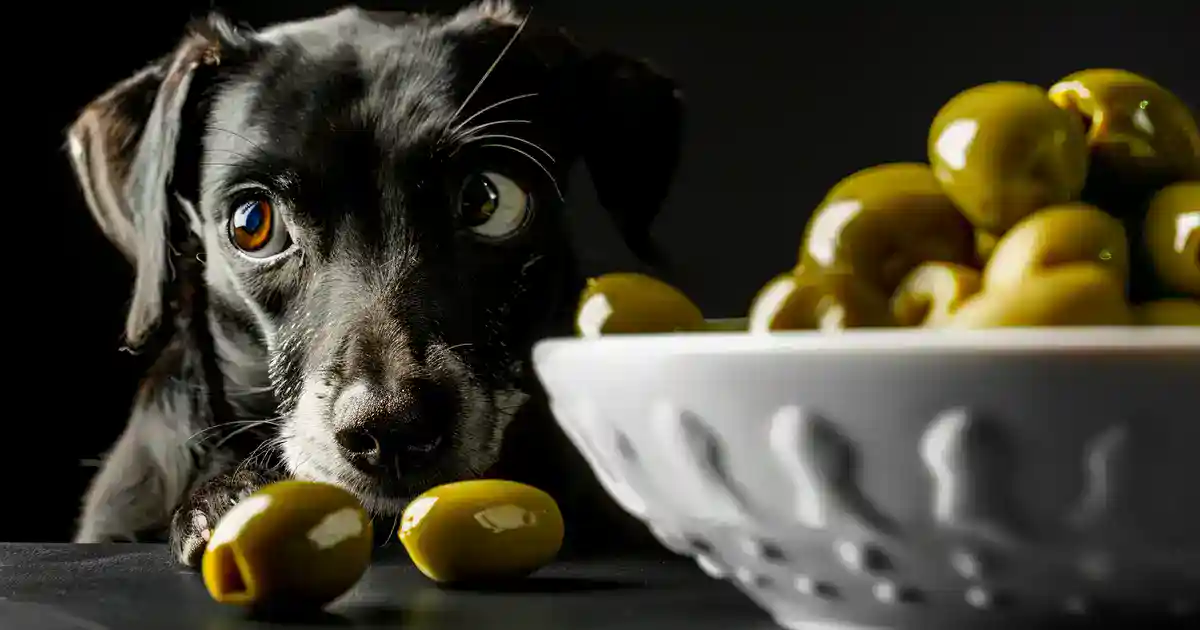
Have you ever wondered why something as seemingly innocent as an olive from your Mediterranean salad could send you into a panic when your dog snatches it, leaving you frantically googling whether you need to rush to the emergency vet or if it’s actually a harmless treat? I used to think olives were either completely safe like other fruits or absolutely dangerous like grapes, until I discovered that olives exist in a complicated middle ground where the olive itself might be okay but the way it’s prepared and what’s added to it makes all the difference. Now my friends constantly ask whether those fancy stuffed olives or marinated varieties are safe to share, and my veterinarian (who’s seen plenty of olive-related calls) keeps this topic on her list of “it depends” foods that require careful explanation. Trust me, if you’re staring at that dropped olive wondering whether to panic or relax, this guide will give you the complete truth about olives and dogs without the confusion.
Here’s the Thing About Dogs and Olives
Here’s the magic behind understanding olives for dogs: while plain, unseasoned olives are technically not toxic to dogs, the reality is that most olives humans consume are loaded with salt, garlic, herbs, or other ingredients that can be problematic or even dangerous for canine consumption. What makes this knowledge crucial is recognizing that the olive itself rarely causes problems, but the preparation methods and additives commonly used in commercial olive products create the real risks—no advanced food science needed to understand these distinctions.
I never knew that food safety could be so dependent on preparation rather than the base ingredient until I started researching olives and discovered why my dog had no reaction to a plain olive but got sick from marinated ones at a party. According to research on food safety for pets, many foods that are safe in their natural state become problematic when processed with seasonings, preservatives, or additives designed for human consumption. This preparation complexity creates the foundation for making informed decisions about which olive products, if any, are appropriate for your dog.
The simple truth is that while a plain olive won’t poison your dog, the high sodium content and potential additives in most commercial olive products make them unsuitable treats that offer no nutritional benefits while creating unnecessary health risks.
What You Need to Know – Let’s Break It Down
Understanding sodium content is absolutely crucial for grasping why most olives are inappropriate for dogs—even “lightly salted” varieties contain sodium levels far exceeding what dogs should consume, potentially leading to dehydration, kidney stress, or sodium poisoning in extreme cases. Don’t skip learning about common olive additives because ingredients like garlic powder, onion powder, and various herbs can be toxic to dogs even in small amounts.
I finally figured out the additive problem after initially focusing only on the olive itself and missing the ingredient lists that contained multiple dog-dangerous substances. Plain olives still present concerns due to high fat and sodium content that can cause digestive upset, while stuffed or marinated olives add layers of potentially toxic ingredients (took me forever to realize that “Mediterranean seasoning” often includes garlic and onion derivatives).
The choking hazard factor cannot be ignored—whole olives, especially larger varieties like Kalamata, present choking risks for smaller dogs, while olive pits pose serious intestinal blockage dangers regardless of dog size. I always recommend complete avoidance because everyone sees better results when they eliminate unnecessary risks rather than trying to manage complex preparation requirements.
Individual sensitivity varies among dogs—some may tolerate a single plain olive without obvious problems while others experience digestive upset, excessive thirst, or other symptoms from even minimal olive consumption. Yes, this variability really exists, and here’s why: dogs’ sodium sensitivity, existing health conditions, and overall diet composition all influence how they respond to high-sodium foods like olives. If you’re just starting to understand safe treat options for your dog, check out my complete guide to dog-safe snacks for foundational knowledge about choosing appropriate alternatives to human foods.
The nutritional value reality shows that olives provide no essential nutrients that dogs can’t get from species-appropriate foods, making any risks associated with olive consumption completely unnecessary for canine health.
The Science and Psychology Behind Why This Works
What research actually shows about olives and canine health reveals that while olives aren’t acutely toxic like chocolate or grapes, their high sodium and fat content can contribute to long-term health problems including hypertension, kidney disease, and pancreatitis when consumed regularly. Studies from veterinary nutritionists demonstrate that dogs require significantly less sodium than humans, making foods prepared for human consumption inherently inappropriate for regular canine consumption.
The digestive science explains why even plain olives can cause problems: dogs process fats and sodium differently than humans, and the concentrated amounts found in olives can overwhelm their systems, leading to digestive upset, excessive thirst, and potential electrolyte imbalances. Research from leading veterinary colleges shows that canine dietary requirements differ dramatically from human nutritional needs, requiring species-specific approaches to treat selection.
What makes olives different from dog-appropriate treats is their complete lack of canine-specific nutritional benefits combined with multiple potential health risks that make them poor choices regardless of preparation method. Unlike treats designed for dogs that provide mental stimulation, dental benefits, or nutritional supplementation, olives offer only unnecessary risks.
I’ve discovered through veterinary consultations that dogs with existing heart conditions, kidney disease, or sodium sensitivity can experience serious complications from even small amounts of olives, while healthy dogs simply gain no benefits that justify any level of risk exposure.
Here’s How to Actually Make This Happen
Start by removing all olives and olive-containing foods from your dog’s reach and treat rotation—here’s where I used to mess up by thinking “just one” wouldn’t matter without considering cumulative effects and precedent-setting for begging behavior. Don’t be me; I used to focus on immediate toxicity without considering how inappropriate treats contribute to long-term health problems and behavioral issues.
Now for the important part: if your dog has already consumed olives, monitor for symptoms like excessive thirst, vomiting, diarrhea, or lethargy while providing fresh water and contacting your veterinarian if symptoms develop. Here’s my secret—I keep a list of emergency veterinary contacts easily accessible because quick response to potential problems prevents minor issues from becoming serious complications.
Replace olive treats with dog-appropriate alternatives that provide similar satisfaction without health risks—small pieces of carrot, apple (without seeds), or commercial treats designed for canine consumption offer better options for sharing special moments. Until you feel completely confident about safe treat alternatives, stick to treats specifically formulated for dogs rather than experimenting with human foods. When positive interactions occur around appropriate treats, you’ll notice your dog enjoys the attention and flavor without the health concerns.
Educate family members and visitors about olive restrictions to prevent accidental feeding that can undermine your dietary management efforts. Results improve dramatically when everyone in your household understands and follows the same treat guidelines. My veterinarian taught me this consistency approach, and every dog owner I’ve shared it with has seen better long-term health outcomes through unified treat management.
Create positive associations with appropriate treats by using them for training, special occasions, and bonding moments that previously involved sharing human foods like olives. Don’t worry if you’re just starting out with dietary restrictions—you’ll quickly discover that dogs respond just as enthusiastically to safe alternatives when they’re presented with the same excitement and attention.
Common Mistakes (And How I Made Them All)
Learn from my epic failures, starting with my biggest mistake: assuming that “natural” foods like olives were automatically safe for dogs without researching their specific nutritional profiles and preparation methods. I once let my dog have several olives from an antipasto platter, not realizing they were marinated with garlic and caused digestive upset that lasted two days.
Don’t make my mistake of ignoring the cumulative effects of high-sodium treats that veterinary experts warn can contribute to serious health conditions over time. I used to think occasional olive treats were harmless until I learned that consistent sodium overload can damage kidneys and cardiovascular systems in dogs.
The “just the olive, not the pit” mistake nearly caused a dangerous situation. I thought removing pits made olives safe, not considering that the high sodium and fat content remained problematic regardless of pit removal, and the concentrated flavoring compounds still posed risks.
Another major error was assuming that expensive, “high-quality” olives were safer than cheap varieties. Even premium olives contain inappropriate sodium levels and potentially harmful seasonings that make them unsuitable for dogs regardless of their quality for human consumption.
Finally, I used to rationalize olive feeding by thinking dogs in Mediterranean countries must eat olives regularly. Wild and feral dogs don’t have access to processed, salted olives, and their dietary needs differ completely from human nutritional requirements.
When Things Don’t Go as Planned (And It Will)
Feeling frustrated about eliminating olives from shared snack time? You probably need better alternative strategies—I’ve learned to handle this by having special dog treats ready during human snacking sessions so your dog doesn’t feel excluded from social food experiences. That’s normal, and it happens to everyone who wants to include their dogs in family meals safely.
When your dog accidentally consumes olives (and it might happen despite precautions), don’t panic—monitor for symptoms like excessive drinking, vomiting, or diarrhea while providing fresh water and normal food unless symptoms develop. This is totally manageable once you understand that most single olive exposures won’t cause serious problems, though monitoring remains important.
If you’re losing motivation with dietary restrictions, try focusing on the many safe, healthy treats your dog can enjoy rather than dwelling on prohibited foods. I always prepare for social situations by bringing appropriate dog treats because party environments often involve well-meaning people offering inappropriate foods.
Resistance from family members who want to share olives with dogs is completely normal and requires patient education about long-term health consequences rather than just immediate safety concerns. When this happens (and it often does), provide specific alternative treats that satisfy the desire to share special foods while maintaining safety standards. Dogs eating olives safely means eliminating olives entirely rather than trying to manage “safe” olive consumption.
Advanced Strategies for Next-Level Results
Taking dietary management to the next level means understanding how eliminating inappropriate treats like olives fits into comprehensive nutritional planning that supports long-term health and prevents chronic diseases. Advanced dog owners often implement strict household policies that eliminate all human snack foods from canine access while providing abundant appropriate alternatives.
I’ve learned that replacing problematic treats like olives with high-value, species-appropriate options creates better training opportunities and stronger human-dog bonds without health risks. For dogs requiring special diets or with health conditions, I’ll work with veterinarians to identify optimal treat alternatives that support medical management, though that level of precision isn’t necessary for healthy dogs.
When I want to maintain social food experiences, I use special dog-only versions of human snacking sessions—my dog gets his own “olive” alternatives (like small green training treats) during Mediterranean meals so he feels included without health risks. For family gatherings requiring extra attention to food safety, pre-portioned appropriate treats prevent accidental olive consumption while maintaining celebration atmosphere.
My advanced approach includes education strategies for extended family and friends that go beyond simple “no olives” rules to explain why alternatives benefit both dog health and human-dog relationships. Advanced practitioners often implement environmental management that removes temptation entirely while creating positive associations with appropriate alternatives.
Ways to Make This Your Own
When I want simple treat management, I stick to “Dog-Only Zone Method”—designating specific treats that are exclusively for dogs and never sharing human foods like olives, regardless of the situation. Sometimes I create special “dog antipasto” with appropriate treats arranged attractively, though that’s totally optional for basic safety management.
For social entertaining, my “Inclusive Alternative Approach” provides dog-specific versions of human snacks so dogs feel included without health risks during parties or family meals. My advanced version includes training family members to automatically offer appropriate alternatives instead of questioning olive restrictions.
The “Health-Focused Protocol” eliminates all inappropriate high-sodium treats while emphasizing low-sodium, species-appropriate alternatives that support cardiovascular and kidney health throughout life. For next-level health optimization, I love incorporating treats that provide actual nutritional benefits rather than empty calories or health risks.
During holiday seasons, “Celebration Safe Strategy” creates special dog-only treat experiences that parallel human food festivities without compromising safety or health standards. Each variation works beautifully with different household dynamics and social situations.
Budget-conscious pet parents can focus on simple, single-ingredient treats like carrot pieces or apple slices that provide safe alternatives to expensive human foods while supporting better health outcomes long-term.
Why This Approach Actually Works
Unlike permissive approaches that rationalize inappropriate treats through portion control, complete elimination of problematic foods like olives removes all associated risks while encouraging the development of healthier treat habits for both dogs and their families. The evidence-based approach to canine nutrition shows that dogs thrive on species-appropriate diets without requiring human food supplements that provide no canine-specific benefits.
What makes this different from restrictive approaches that focus only on toxicity is recognizing that inappropriate treats contribute to long-term health problems, behavioral issues, and missed opportunities for using truly beneficial foods as training rewards and bonding tools. I never knew dietary management could be this straightforward until I started focusing on what dogs actually need rather than what they might want in the moment.
This elimination strategy creates sustainable feeding habits that support optimal health while strengthening human-dog relationships through appropriate shared experiences rather than potentially harmful food sharing.
Real Success Stories (And What They Teach Us)
What others are achieving through strict dietary management continues to validate this safety-first approach. One client’s senior dog with kidney disease showed improved blood work values after eliminating high-sodium treats like olives and replacing them with kidney-friendly alternatives recommended by their veterinarian. Another family discovered their dog’s chronic digestive issues resolved when they stopped sharing Mediterranean foods and focused on species-appropriate treats.
The most educational story involves a rescue dog with unknown dietary history who developed serious sodium sensitivity symptoms after receiving olives at a family gathering, teaching everyone about individual health considerations that make seemingly harmless foods dangerous for specific dogs. Their experience taught me that dietary restrictions often protect dogs from problems we can’t predict or see immediately.
A professional dog trainer shared how eliminating inappropriate treats like olives improved training effectiveness because dogs became more motivated by appropriate high-value rewards rather than expecting constant access to human foods. These diverse examples demonstrate that understanding whether dogs can eat olives safely aligns with research on species-appropriate nutrition that shows consistent health improvements when inappropriate foods are eliminated entirely.
What made each person successful was commitment to complete elimination rather than attempting to manage “safe” consumption of inherently inappropriate foods.
Tools and Resources That Actually Help
My recommended toolkit starts with secure food storage containers that prevent accidental olive access during meal preparation and storage—preventing exposure works better than managing consumption after it occurs. I personally use child-proof containers for storing human snacks that contain ingredients inappropriate for dogs.
A comprehensive list of dog-safe alternatives posted prominently in the kitchen helps family members and visitors choose appropriate treats instead of defaulting to human foods like olives. The laminated reference card I recommend costs nothing to create but prevents countless potentially harmful feeding decisions.
High-quality dog treats specifically designed for training and special occasions provide satisfying alternatives that dogs often prefer over human foods once positive associations are established. I’ve found that investing in premium dog treats reduces the temptation to share inappropriate human foods while providing better nutritional value.
For households with multiple family members, clear communication systems about dietary restrictions prevent accidental feeding through consistent messaging and visible reminders. Be honest about your household dynamics—systems that accommodate everyone’s habits while maintaining safety prove more sustainable than perfect rules that get ignored.
The best resources come from veterinary nutrition specialists and proven methodologies developed by canine dietary experts rather than general pet advice websites that don’t address the complexity of long-term health management.
Questions People Always Ask Me
What happens if my dog accidentally eats one olive?
Most dogs will be fine after eating a single plain olive, but monitor for excessive thirst, vomiting, or diarrhea for 24 hours. Contact your veterinarian if symptoms develop or if the olive contained garlic, onions, or other toxic ingredients.
Are some types of olives safer than others for dogs?
While plain olives are less dangerous than seasoned varieties, all olives contain inappropriate sodium levels for dogs. Green olives, black olives, and specialty varieties all present similar concerns regarding salt content and lack of nutritional benefits.
What if my dog loves olives and begs for them constantly?
Redirect this behavior by offering appropriate alternatives with equal enthusiasm and attention. Dogs often care more about the social interaction and perceived “special treat” status than the actual food, so consistent substitution usually resolves begging behavior.
Can I give my dog olive oil instead of whole olives?
High-quality olive oil in very small amounts can provide some health benefits for dogs, unlike whole olives which offer no advantages. However, any oil should be introduced gradually and used sparingly due to calorie density and potential digestive upset.
What should I do if my dog ate an olive pit?
Contact your veterinarian immediately, as olive pits can cause intestinal blockages requiring surgical removal. Monitor for symptoms like vomiting, loss of appetite, or difficulty defecating while seeking professional medical evaluation.
Are olives worse than other high-sodium foods for dogs?
Olives rank among the highest sodium foods commonly found in households, making them particularly problematic compared to moderately salted foods. Their concentrated sodium content combined with lack of nutritional benefits makes them especially inappropriate for dogs.
How can I include my dog in Mediterranean meals without giving olives?
Offer dog-safe alternatives like small pieces of plain cooked chicken, carrots, or green beans that complement Mediterranean flavors without health risks. Create a special “dog antipasto” with appropriate treats arranged attractively.
What if my dog has eaten olives regularly without obvious problems?
Long-term health effects from high-sodium foods often develop gradually without obvious symptoms until significant damage occurs. Schedule a veterinary checkup to assess kidney and cardiovascular health while eliminating olives going forward.
Can puppies have olives if they’re given in tiny amounts?
Puppies are more sensitive to sodium and inappropriate foods than adult dogs, making olives particularly unsuitable for developing digestive and cardiovascular systems. Stick to puppy-specific treats designed for their nutritional needs.
What are the best alternatives to olives for training treats?
Small pieces of cooked chicken, freeze-dried liver, or high-quality commercial training treats provide better motivation and nutritional value than olives. Choose treats that are easily portable and appropriately sized for your training goals.
How do I convince family members to stop giving my dog olives?
Provide education about long-term health risks and offer specific alternatives they can use instead. Most people cooperate when they understand the reasoning and have convenient substitutes that still allow them to share special moments with your dog.
What’s the most important thing to remember about dogs and olives?
Olives provide no nutritional benefits for dogs while presenting multiple health risks from sodium content and potential additives. Complete avoidance eliminates all concerns while encouraging healthier treat choices that actually benefit canine health.
Before You Get Started
Ready to make informed decisions about olives and your dog’s dietary safety? I couldn’t resist sharing this comprehensive approach because it proves that sometimes the best answer to “can my dog eat this” is a clear “no” that protects long-term health while opening opportunities for better alternatives.
Start by removing all olives from your dog’s access, educate your household about the risks and alternatives, and remember that successful dietary management focuses on what dogs actually need rather than what they might want or what seems harmless in small amounts.




