
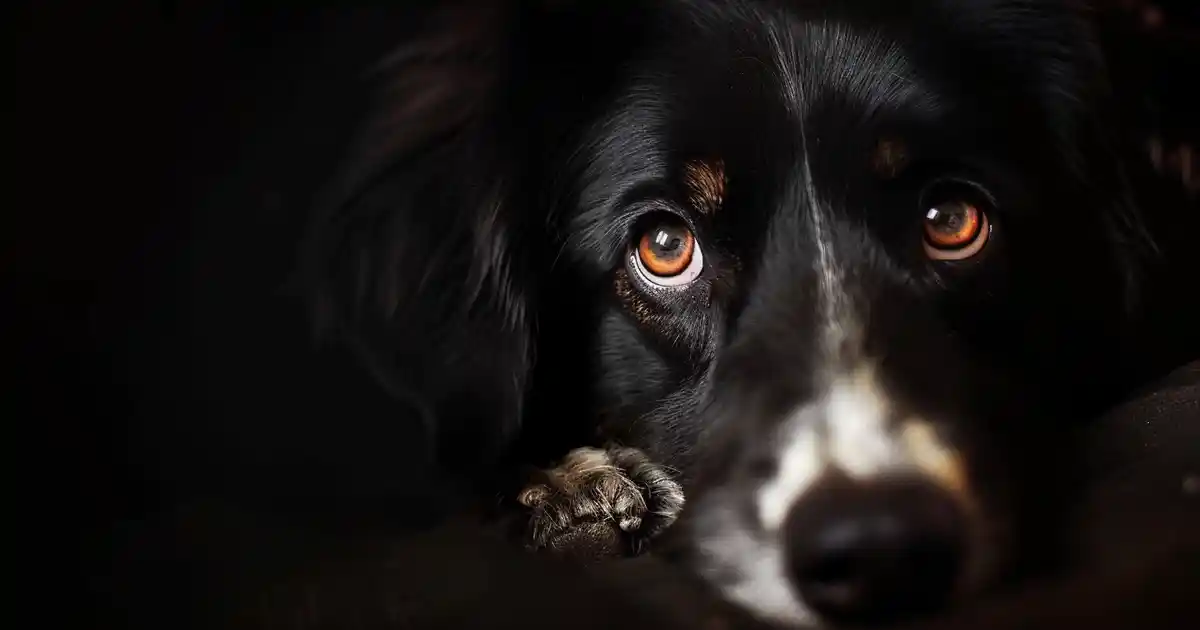
Have you ever wondered how your dog seems to navigate your dark house so effortlessly at night, moving around furniture and finding their favorite toys while you’re stumbling into walls? I used to think dogs had some kind of supernatural night vision until I discovered the fascinating science behind canine eyesight and realized that while they don’t see in complete darkness, their vision is remarkably adapted for low-light conditions. Now when I watch my Border Collie Scout confidently trotting through our dimly lit backyard at dusk, I understand exactly what’s happening in those amazing eyes and why she can spot a squirrel from across the yard when I can barely make out the fence. Trust me, if you’ve ever been amazed by your dog’s nighttime abilities or wondered whether you should worry about them in the dark, this scientific exploration will reveal the remarkable truth about how dogs really see when the lights go down.
Here’s the Thing About Canine Night Vision
Here’s the magic behind why dogs seem so confident in low-light conditions: their eyes are specifically designed with adaptations that collect and amplify available light far more efficiently than human eyes ever could. What makes this evolutionary advantage work is a combination of larger pupils, more light-sensitive cells, and a special reflective layer that essentially gives dogs “biological night-vision goggles.” I never knew that mammalian vision systems could be so dramatically different until I started researching canine anatomy and discovered how these adaptations developed over thousands of years of evolution. The combination of specialized eye structures and enhanced light sensitivity creates amazing visual capabilities that work best during dawn and dusk hours. It’s honestly more sophisticated than I ever expected—a complex biological system that gives dogs a significant advantage during their natural hunting and activity periods.
What You Need to Know – Let’s Break It Down
Understanding the key anatomical differences is absolutely crucial for appreciating how superior canine night vision really is. I finally figured out that dogs have about five times more rod cells (light-detecting photoreceptors) than humans, which means they can detect much fainter light sources (took me forever to grasp this fundamental difference). Their pupils also dilate much larger than ours, allowing significantly more light to enter the eye and reach those sensitive detection cells.
Don’t skip learning about the tapetum lucidum—that’s the reflective layer behind dogs’ retinas that creates the distinctive “eye shine” you see in photos and gives them their enhanced night vision capabilities. I always recommend understanding that this mirror-like structure reflects light back through the retina, giving photoreceptor cells a second chance to capture photons they might have missed the first time. This adaptation works beautifully for detecting movement and shapes in low light, but you’ll need to understand that it doesn’t work in complete darkness.
The visual spectrum differences make a huge impact too. Canine vision and behavior patterns help explain why dogs are most active during twilight hours when their vision advantages are maximized. Yes, dogs really do see better than humans in dim conditions, and here’s why: their entire visual system evolved to optimize performance during dawn and dusk when their wild ancestors did most of their hunting and territorial activities.
The Science and Psychology Behind How This Works
Research from veterinary ophthalmologists demonstrates that dogs can see clearly in light conditions that are five to six times dimmer than what humans require for basic navigation. Studies confirm that canine night vision peaks during twilight hours when there’s still some ambient light to amplify, rather than in complete darkness where even dogs struggle significantly. What research actually shows is that dogs sacrifice some color discrimination and fine detail recognition to gain this remarkable low-light performance.
The evolutionary psychology behind these adaptations reveals how dogs developed as crepuscular animals—most active during dawn and dusk when prey animals are also moving. Unlike purely nocturnal animals that hunt in complete darkness, dogs evolved to take advantage of twilight conditions when they could use both their enhanced night vision and their other superior senses like hearing and smell. Expert research on canine evolution agrees that these visual adaptations gave dogs significant survival advantages and continue to influence their behavior patterns today.
Here’s How Dog Night Vision Actually Works
Start by understanding that dogs don’t see in complete darkness—they need some ambient light for their visual system to function, just like a sophisticated low-light camera needs minimal illumination. Here’s where I used to make wrong assumptions: I thought dogs could see perfectly in pitch-black conditions, but they actually require about one-sixth the light that humans need to navigate effectively.
Now for the important part—how the tapetum lucidum amplifies available light. This reflective layer acts like a biological mirror, bouncing light that passes through the retina back for a second chance at detection. The process takes milliseconds but dramatically improves their ability to detect movement, shapes, and obstacles in dim conditions.
Here’s my breakthrough understanding of how this works in practice: dogs excel at detecting motion and general shapes in low light, but they sacrifice the fine detail vision that humans rely on during daylight hours. My veterinary ophthalmologist explained this trade-off—enhanced light sensitivity comes at the cost of sharp focus and color discrimination.
Don’t worry if your dog seems less confident in completely dark environments; this is normal and indicates their vision system is working as designed. Their night vision works best when there’s at least minimal ambient light from streetlights, moonlight, or even starlight to amplify.
The practical result varies by individual dog and breed, but most dogs can navigate familiar environments confidently in conditions that would leave humans completely disoriented. Every dog’s visual capability has its own characteristics based on factors like age, breed, and individual eye health.
Common Mistakes (And How I Made Them All)
Don’t make my mistake of assuming Scout could see perfectly in our completely dark basement—I learned that even dogs need some light source when I watched her carefully feeling her way around unfamiliar dark spaces. The biggest error I see dog owners make is expecting their pets to have supernatural vision instead of understanding the real science behind their enhanced but still limited night vision capabilities.
I used to think that because dogs have better night vision, they didn’t need any lighting for nighttime activities. Wrong! Dogs still benefit from minimal lighting for safety and confidence, especially in unfamiliar environments or when navigating stairs and obstacles. Another massive mistake I made was not realizing that older dogs often experience declining night vision just like aging humans do.
The mindset mistake that nearly everyone makes is comparing dog night vision to movie depictions of military night-vision goggles instead of understanding the biological reality. Some dogs have better night vision than others based on breed characteristics and individual genetics, while age and eye health significantly impact performance. I learned to observe my dog’s actual behavior in different lighting conditions rather than making assumptions about her capabilities.
When Things Don’t Go as Planned (And It Will)
Feeling concerned about your dog’s nighttime confidence or navigation abilities? That’s completely normal, and it happens to everyone who pays close attention to their pet’s behavior in different lighting conditions. If your dog seems hesitant or bumps into things in low light, this could indicate vision changes that warrant a veterinary examination.
You probably need more understanding about individual variation if your dog doesn’t seem to have the superior night vision you expected—I’ve learned to handle this by recognizing that factors like age, breed, and health status all influence visual capabilities. When concerns arise about night vision (and they will), don’t stress, just observe your dog’s behavior patterns and consult with a veterinary ophthalmologist if you notice significant changes.
This is totally manageable if you notice your dog becoming more cautious at night or seeming less confident in dim conditions. I always prepare for natural age-related changes by providing gentle lighting in areas where my dog spends time and being patient with any hesitation in unfamiliar dark environments. If you’re losing confidence in your dog’s night vision abilities, try simple tests in controlled environments to understand their actual capabilities versus your expectations.
Advanced Strategies for Supporting Your Dog’s Night Vision
Advanced dog owners often implement specialized approaches like providing strategic lighting that enhances rather than overwhelms their dog’s natural visual capabilities. I discovered that red lights preserve dogs’ night vision adaptation better than white lights, similar to how astronomers use red flashlights to maintain their dark adaptation.
When I want to support Scout’s nighttime confidence, I use motion-activated LED strips in hallways and stairs that provide just enough illumination for safety without disrupting her natural vision adaptation. For special situations like camping or hiking in low light, I’ll gradually acclimate her to headlamps and flashlights so the sudden bright light doesn’t temporarily blind her.
The expert-level approach includes understanding how different weather conditions affect visibility and adjusting activities accordingly. Foggy or overcast nights significantly reduce the ambient light that dogs rely on, while clear, moonlit nights provide optimal conditions for their enhanced vision capabilities. Advanced understanding involves recognizing breed differences—dogs with prominent eyes may have different night vision capabilities than breeds with deep-set eyes or flat faces.
Ways to Make This Knowledge Your Own
When I want to better understand Scout’s visual world, I use what I call “Twilight Observations”—spending evening time outdoors to see what she can detect that I cannot, which helps me appreciate her remarkable sensory capabilities. For special nighttime activities like camping, I’ll plan around optimal lighting conditions and bring backup illumination that won’t overwhelm her natural vision.
This makes our evening routines more informed and definitely improves safety when we’re active during low-light conditions. My practical version focuses on understanding which times of day offer the best visibility for different activities based on available light and weather conditions.
Sometimes I use red-filtered flashlights during nighttime walks to preserve both my and Scout’s night vision adaptation, though this requires planning ahead and special equipment. For next-level appreciation, I love comparing her behavior and confidence levels in different lighting conditions to better understand how her vision actually works in practice.
My advanced approach includes “Vision-Aware Scheduling” where I plan activities around times when her natural visual advantages are maximized, like early morning or evening walks when her enhanced low-light vision provides optimal environmental awareness. Each variation works beautifully with different lifestyle needs—whether you’re a night shift worker needing to understand your dog’s evening capabilities or an outdoor enthusiast wanting to include your dog in dawn and dusk activities.
Why Understanding This Actually Matters
Unlike many animal facts that are just interesting trivia, understanding canine night vision helps you make better decisions about your dog’s safety, exercise timing, and environmental needs. The secret lies in appreciating that dogs aren’t just “pets with better night vision”—they’re animals whose entire behavioral patterns and activity preferences evolved around specific visual capabilities.
What makes this knowledge different from casual pet information is how it impacts practical decisions about lighting, exercise schedules, and safety precautions that affect your dog’s daily life. I discovered through experience that dogs who can utilize their natural vision advantages are often more confident, active, and engaged with their environment. This understanding creates better human-dog relationships because it’s based on scientific appreciation for how dogs actually experience their visual world rather than human assumptions about what they need.
Real-World Applications (And What They Teach Us)
One of my favorite examples involves a search and rescue team that schedules training sessions during twilight hours when their dogs’ enhanced vision provides maximum advantage for detecting human scent trails and movement. Their success rate during dawn and dusk operations demonstrates how understanding canine vision capabilities can improve working dog performance significantly.
Another practical application comes from veterinary behaviorists who help anxious dogs by optimizing lighting conditions that support their natural visual comfort zones. Dogs with night vision decline often benefit from gentle, consistent lighting that doesn’t overwhelm but provides adequate illumination for confident navigation. These approaches align with research showing that environmental modifications based on understanding canine sensory capabilities can reduce anxiety and improve quality of life.
A particularly insightful example involves elderly dog caregivers who learned to recognize vision changes early by understanding normal canine night vision capabilities. By knowing what to expect from healthy dog vision, they could identify when their senior pets needed additional support or veterinary attention. These experiences teach us that scientific understanding of our dogs’ capabilities leads to better care decisions and stronger human-animal relationships.
Tools and Resources That Enhance Understanding
My recommended approach starts with simple observation tools like keeping a “vision journal” where you note your dog’s confidence and behavior in different lighting conditions over time. I personally use a light meter app on my phone to measure actual illumination levels when testing my dog’s visual capabilities in various environments.
For enhanced safety, I love motion-activated LED lights that provide gentle illumination without overwhelming canine night vision adaptation. A red-filtered flashlight becomes invaluable for nighttime activities when you need visibility without disrupting your dog’s natural low-light advantages.
The American College of Veterinary Ophthalmologists’ resources provide excellent scientific information about canine vision and eye health that helps distinguish normal capabilities from potential problems. I always recommend having contact information for a veterinary ophthalmologist if you have concerns about changes in your dog’s vision or night navigation abilities.
Questions People Always Ask Me
Can dogs see in complete darkness like night-vision goggles? No, dogs need some ambient light to see—they can function in much dimmer conditions than humans but still require minimal illumination from sources like moonlight or streetlights.
Why do my dog’s eyes glow in photos and at night? The “eye shine” comes from the tapetum lucidum, a reflective layer that bounces light back through the retina to enhance their night vision capabilities.
Is my dog’s night vision better than cats? Cats generally have superior night vision due to even more specialized adaptations, but dogs still significantly outperform humans in low-light conditions.
Do all dog breeds have the same night vision abilities? There can be variations based on eye structure and genetics, but most dogs share similar basic night vision advantages compared to humans.
Should I provide lighting for my dog at night? Gentle lighting can help with safety and confidence, especially for older dogs or in unfamiliar environments, but isn’t necessary for basic navigation in familiar spaces.
How can I tell if my dog’s night vision is declining? Watch for increased hesitation in dim conditions, bumping into familiar objects, or reluctance to navigate stairs or obstacles in low light.
What age do dogs start losing their night vision? Like humans, dogs may experience gradual vision changes as they age, typically becoming noticeable around 7-10 years depending on the individual and breed.
Can anything improve my dog’s night vision? While you can’t enhance their natural capabilities, ensuring good eye health through regular veterinary care and proper nutrition supports optimal vision function.
Do working dogs have better night vision than pets? Working dogs don’t necessarily have superior vision, but they may be better trained to utilize their natural capabilities effectively in various conditions.
Should I avoid nighttime activities with my dog? Not at all—many dogs enjoy and excel during twilight hours when their vision advantages are maximized, just use appropriate safety precautions.
Can diet affect my dog’s night vision? A balanced diet with adequate vitamin A supports overall eye health, though it won’t dramatically change their natural night vision capabilities.
How does dog night vision compare to other animals? Dogs have better night vision than humans but less than specialized nocturnal animals like cats, owls, or raccoons that hunt primarily in darkness.
Before You Start Observing
I couldn’t resist sharing this because understanding your dog’s remarkable night vision capabilities proves that our furry friends experience the world in ways that are both similar to and dramatically different from our own human perspective. The best night vision discoveries happen when you start paying attention to your dog’s confidence and behavior during different lighting conditions, appreciating the sophisticated biological adaptations that make their twilight adventures possible.
Ready to begin? Start with a simple first step: spend some evening time observing your dog during dusk or dawn, watching how confidently they navigate while you’re still adjusting to the changing light. Understanding their visual world creates deeper appreciation for the remarkable creature sharing your life and the evolutionary adaptations that make their nighttime capabilities so impressive.




