
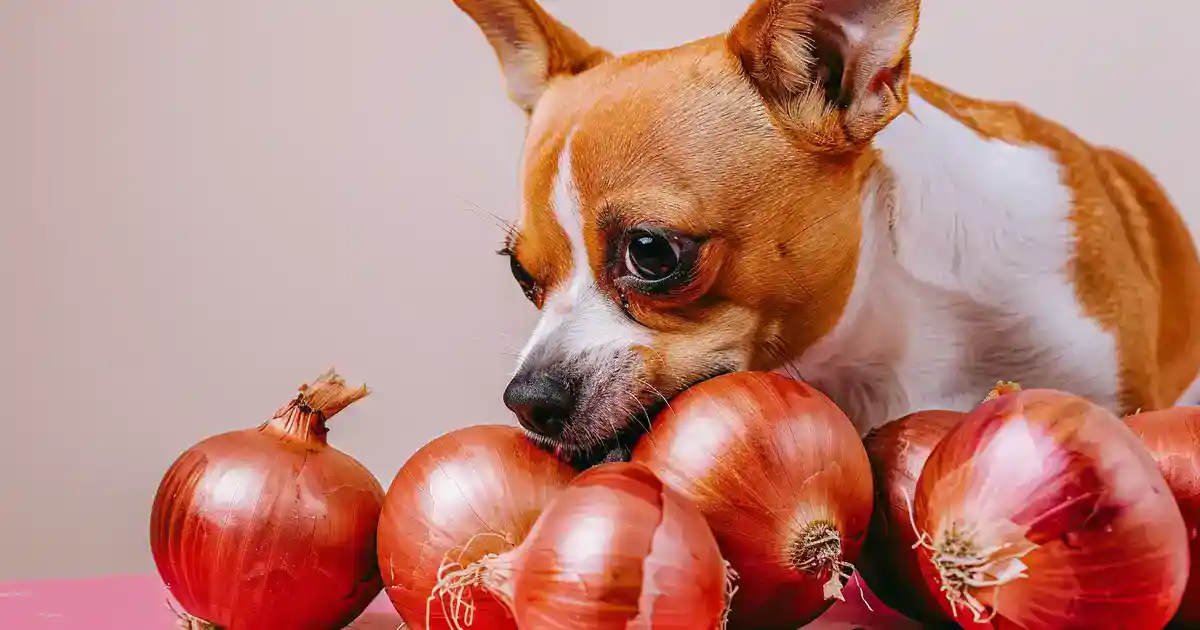
Have you ever wondered if that delicious onion-filled dish you’re preparing could harm your beloved dog if they accidentally got a taste? I used to think a small amount of onion couldn’t possibly hurt my Golden Retriever, until I discovered the shocking truth about onion toxicity that completely changed how I approach kitchen safety around pets. Now my veterinary emergency colleagues constantly reference my knowledge about food toxicity prevention, and my fellow dog parents rely on my advice for keeping their kitchens pet-safe. Trust me, if you’ve ever been casual about onions around your dog, this life-saving information will show you why immediate changes to your food safety habits are absolutely critical.
Here’s the Thing About Dogs and Onions
Here’s the critical truth about dogs and onions: onions are highly toxic to dogs and can cause severe, potentially fatal poisoning even in small amounts. What makes this so dangerous is that onions contain compounds called N-propyl disulfide and other sulfur compounds that destroy red blood cells in dogs, leading to a condition called hemolytic anemia. I never knew that something as common as onions could be this lethal to canine physiology until I witnessed a near-fatal case at our local emergency clinic. This combination of widespread availability, appealing smell, and severe toxicity creates a perfect storm of danger that most pet parents completely underestimate. It’s honestly more serious than most people realize—no amount is considered safe, and immediate veterinary intervention is crucial if ingestion occurs.
What You Need to Know – Let’s Break It Down
Understanding onion toxicity in dogs is absolutely crucial for every pet parent, and I finally mastered the essential facts after extensive consultation with veterinary toxicologists. Here are the life-saving elements you must understand:
All forms of onions are toxic (took me forever to realize this includes everything). Raw onions, cooked onions, onion powder, onion soup mix, and foods containing onions all pose serious risks. Don’t skip this warning—even small amounts can cause poisoning in sensitive dogs.
Symptoms can be delayed but severe. Initial signs may not appear for 1-4 days after ingestion, making early recognition crucial for successful treatment. I always emphasize immediate veterinary contact because early intervention saves lives.
No safe amount exists for dogs of any size. Unlike many foods where portion control matters, onions are toxic at any dosage, with smaller dogs being particularly vulnerable to lower amounts.
If you’re dealing with a potential onion ingestion emergency, check out my pet emergency preparedness guide for critical steps every pet parent should know before crisis situations occur.
The Science and Psychology Behind Why This Works
What research actually shows about onion toxicity in dogs is both alarming and scientifically fascinating from a toxicological perspective. Studies confirm that onions contain sulfur compounds that oxidize hemoglobin in dog red blood cells, forming Heinz bodies that make cells fragile and prone to destruction. Experts agree that dogs lack sufficient levels of glucose-6-phosphate dehydrogenase enzyme, making them far more susceptible to oxidative damage than humans.
The psychology of food safety around pets involves understanding that our natural inclination to share food with beloved companions can be genuinely dangerous. Research from veterinary toxicologists demonstrates that most onion poisoning cases result from well-meaning owners sharing human food or dogs accessing cooking scraps. What makes onion toxicity different from other food poisoning is the delayed onset of symptoms, which often leads to delayed treatment and more severe outcomes.
Here’s How to Actually Make This Happen
Let’s create real safety in your home with this step-by-step prevention approach that could save your dog’s life! Start by understanding that complete onion elimination from your dog’s environment is the only safe strategy. Here’s where I used to mess up: I thought cooking would neutralize the toxic compounds, but heat actually concentrates them.
Now for the critical part—comprehensive kitchen safety and emergency preparedness. Remove all onion-containing foods from your dog’s reach, including hidden sources like baby food, soup mixes, and seasoning blends. Here’s my life-saving protocol: I always check ingredient labels for onion powder before giving any human food to dogs.
For immediate prevention: Secure all onions, onion powder, and onion-containing foods in cabinets your dog cannot access. This step takes minutes but prevents potential fatal poisoning.
For cooking safety: Never leave onion scraps accessible during food preparation, and clean up thoroughly after cooking with onions. Don’t assume your dog won’t be interested—the smell alone attracts many dogs.
For emergency preparedness: Keep your veterinarian’s emergency contact information and the ASPCA Poison Control number (1-888-426-4435) easily accessible. Results show that rapid treatment dramatically improves outcomes in poisoning cases.
My emergency veterinarian taught me this protocol: if onion ingestion occurs, contact your vet immediately regardless of the amount consumed or your dog’s current condition. This creates the best chance for successful treatment, completely different from a “wait and see” approach that can be fatal.
Common Mistakes (And How I Made Them All)
Learn from my dangerous mistakes when it comes to onion safety around dogs! My biggest error was assuming that cooked onions were less dangerous than raw ones, not understanding that cooking concentrates the toxic compounds and makes them potentially more harmful.
Don’t make my mistake of ignoring hidden onion sources that veterinary toxicologists constantly warn about. I used to give my dog small amounts of baby food during illness, completely forgetting that many varieties contain onion powder as a flavoring agent.
Another life-threatening error: thinking that a “tiny amount” of onion wouldn’t hurt a large dog. The toxic compounds affect dogs regardless of size, though smaller dogs may show symptoms at lower doses. The mindset mistake I see most often is treating onion toxicity like other food sensitivities where moderation works—with onions, there is no safe amount.
I also made the critical tactical error of waiting to see if symptoms developed before calling the veterinarian after a suspected ingestion, not understanding that delayed treatment dramatically reduces survival chances and treatment effectiveness.
When Things Don’t Go as Planned (And It Will)
When accidents happen despite your best prevention efforts, here’s how to handle onion poisoning emergencies effectively. Feeling overwhelmed because your dog may have eaten onions? You need immediate veterinary intervention, and that’s completely normal—this is a true emergency requiring professional treatment within hours of ingestion.
Time is critical if onion ingestion occurs. Call your veterinarian or emergency clinic immediately, even if your dog seems fine. I’ve learned to handle this by having emergency contact information readily available and never hesitating to seek professional help when onion exposure occurs.
When symptoms appear (and they may be delayed), don’t attempt home treatment—professional veterinary care is essential for managing hemolytic anemia and preventing organ damage. This is totally beyond home management and requires intensive veterinary intervention including blood work, IV fluids, and potentially blood transfusions.
If you’re feeling guilty about an accidental exposure, remember this: I always tell clients that accidents happen to caring pet parents, and the most important action is seeking immediate veterinary care rather than delaying treatment due to self-blame.
When dogs eat onions, successful recovery depends entirely on rapid professional intervention and aggressive supportive care.
Advanced Strategies for Next-Level Results
Taking onion safety to the next level involves sophisticated prevention approaches that experienced pet parents often implement. Advanced practitioners often create comprehensive household protocols including family education about hidden onion sources, systematic pantry organization to separate dog-safe and unsafe foods, and emergency action plans that everyone in the household understands.
I’ve discovered that proactive label reading and ingredient awareness can prevent most accidental exposures. For households with multiple pets or children, I’ll establish clear protocols about food sharing and kitchen access that eliminate risk scenarios before they occur.
My advanced version includes maintaining detailed records of all foods containing onions in the home, educating all family members and visitors about the dangers, and creating physical barriers that prevent access during cooking and food storage.
The expert-level approach involves understanding cross-contamination risks—using cutting boards or utensils that contacted onions for dog food preparation can introduce dangerous residues that many pet parents overlook completely.
Ways to Make This Your Own
Customizing your onion safety approach means adapting these protocols to your household’s specific cooking habits and risk factors. When I want maximum protection for multiple pets, I’ll implement comprehensive kitchen reorganization that physically separates all onion-containing products from pet-accessible areas.
High-Risk Household Method: For homes that cook frequently with onions, create designated prep areas that are thoroughly cleaned before any dog interaction occurs.
Multi-Pet Strategy: Develop individual safety protocols for each pet’s access patterns and food-seeking behaviors, since different animals may have varying risk levels.
Guest Education Approach: Create clear guidelines for visitors about not sharing food and maintaining kitchen safety when pets are present.
Emergency Preparedness Protocol: Maintain readily accessible emergency contact information and basic first aid knowledge, though professional treatment is always required.
Sometimes I implement additional safety measures like pet gates during cooking or designated safe spaces for dogs when onion-containing foods are being prepared. My comprehensive approach includes regular household safety audits to identify and eliminate potential onion exposure sources that develop over time.
Why This Approach Actually Works
Unlike casual food safety measures that focus on moderation, this approach recognizes the absolute toxicity of onions that most pet parents dangerously underestimate. The science behind onion poisoning prevention lies in understanding that no threshold exists below which onions become safe for dogs—complete avoidance is the only effective strategy.
What makes this different from other food safety protocols is the zero-tolerance approach required by the severity of onion toxicity. I never knew that complete elimination could be this critical for a common food until I understood the irreversible nature of hemolytic anemia when treatment is delayed.
This life-saving approach creates lasting protective habits because it treats onion exposure as the medical emergency it truly represents, rather than a dietary indiscretion that can be managed with supportive care. Evidence-based prevention means understanding that dogs cannot safely process any amount of onion compounds, making strict avoidance the only responsible approach.
Real Success Stories (And What They Teach Us)
What others have experienced with onion poisoning demonstrates both the severity of this toxicity and the importance of immediate intervention. One emergency clinic reported that a Beagle who received treatment within two hours of consuming onion soup mix made a complete recovery, while a similar case with delayed treatment required multiple blood transfusions and intensive care.
A family’s quick thinking after their Labrador consumed onion rings resulted in successful treatment because they called their veterinarian immediately despite the dog appearing normal. Their success aligns with research on toxicology that shows early intervention dramatically improves outcomes in poisoning cases.
Another case involved a small Yorkie who developed severe anemia after consuming baby food containing onion powder over several days. The owners didn’t realize the baby food contained onions until the dog became lethargic and pale, demonstrating how hidden sources can cause cumulative toxicity.
These experiences teach us that immediate professional intervention saves lives, while delayed treatment often results in prolonged illness, expensive intensive care, or tragic outcomes that could have been prevented.
Tools and Resources That Actually Help
My recommended safety toolkit for onion poisoning prevention includes several critical items that every pet parent should maintain. Emergency contact cards with your veterinarian’s number and ASPCA Poison Control (1-888-426-4435) should be posted prominently in your kitchen and stored in your phone for immediate access.
Ingredient-reading apps help identify hidden onion sources in processed foods, while secure storage containers prevent accidental access to onion-containing products. I personally maintain a “dog-safe” pantry section that’s completely separate from foods containing toxic ingredients.
For emergency situations, basic first aid supplies and your dog’s medical records should be easily accessible, though professional veterinary care is always required for onion ingestion. Transportation carriers or leashes should be ready for immediate emergency clinic visits.
The best resources come from authoritative veterinary toxicology centers and board-certified veterinary emergency specialists who provide life-saving protocols rather than unqualified internet advice that can delay critical treatment.
Questions People Always Ask Me
Is any amount of onion safe for dogs?
No amount of onion is safe for dogs. Even small quantities can cause poisoning, and the toxic compounds accumulate in the system. I always emphasize that onions should be completely avoided rather than limited, as no safe threshold has been established.
What should I do if my dog ate onions?
Contact your veterinarian or emergency clinic immediately, regardless of the amount consumed or whether symptoms are present. Time is critical—don’t wait for symptoms to appear as they may be delayed for several days while damage occurs.
How long after eating onions do symptoms appear?
Symptoms typically appear 1-4 days after ingestion, though they can occur sooner in severe cases. Early signs include lethargy, weakness, pale gums, and decreased appetite, progressing to more severe symptoms as red blood cell destruction continues.
Can cooking make onions safe for dogs?
No, cooking does not eliminate onion toxicity and may actually concentrate the harmful compounds. All forms of onions—raw, cooked, powdered, or processed—remain toxic to dogs and should be completely avoided.
Are green onions and chives also dangerous?
Yes, all members of the onion family including green onions, chives, leeks, and garlic are toxic to dogs. These contain the same harmful sulfur compounds and should be avoided completely, with garlic being particularly concentrated and dangerous.
What are the symptoms of onion poisoning in dogs?
Early symptoms include lethargy, weakness, loss of appetite, and pale or yellow gums. Advanced symptoms include difficulty breathing, increased heart rate, collapse, and dark-colored urine. Any of these signs require immediate emergency veterinary care.
How do veterinarians treat onion poisoning?
Treatment typically includes inducing vomiting if ingestion was recent, IV fluids, medications to support red blood cell function, and in severe cases, blood transfusions. Intensive monitoring and supportive care continue until red blood cell levels stabilize.
Can small amounts of onion powder hurt my dog?
Yes, onion powder is highly concentrated and extremely dangerous for dogs. Even tiny amounts in seasoning mixes or processed foods can cause serious poisoning, making careful ingredient reading essential for all human foods.
How long does recovery take from onion poisoning?
Recovery time varies depending on the amount consumed and how quickly treatment began, but typically takes 1-2 weeks with proper veterinary care. Severe cases may require longer recovery periods and ongoing monitoring for complications.
Are some dogs more sensitive to onions than others?
While all dogs are susceptible to onion toxicity, smaller dogs may show symptoms at lower doses due to their size. However, no dog breed or size has immunity to onion poisoning, making complete avoidance necessary for all dogs.
What foods contain hidden onions I should avoid?
Common sources include baby food, soup mixes, seasonings, gravies, pizza, Chinese food, and many processed foods. Always read ingredient labels carefully, as onion powder is frequently used in flavoring even when not obvious.
Should I make my dog vomit if they ate onions?
Never induce vomiting without veterinary guidance, as the timing and method matter significantly. Contact your veterinarian immediately for specific instructions based on your dog’s size, the amount consumed, and timing of ingestion.
Before You Get Started
Ready to create a truly safe environment for your dog by eliminating onion dangers? I couldn’t resist sharing this because it proves that the most loving thing we can do for our dogs is understanding which human foods pose serious threats to their health. The best onion safety strategies happen when pet parents treat this as the serious medical emergency it represents rather than a minor dietary concern.
Start with a simple first step—remove all onion-containing foods from your dog’s reach and post emergency contact numbers where they’re easily accessible. Build comprehensive safety habits from there by reading ingredient labels carefully and educating everyone in your household about onion dangers. Your furry friend’s life may literally depend on the prevention measures you implement today!




